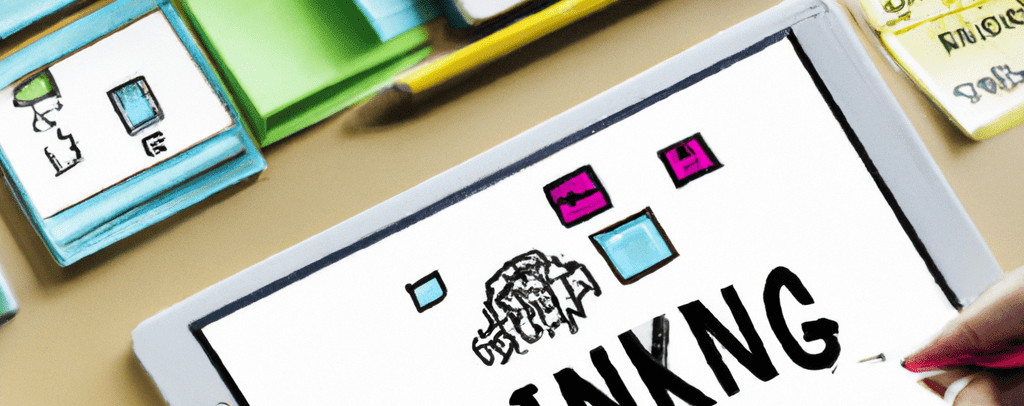
Design Thinking is a problem-solving approach that combines creativity and analytical thinking to arrive at innovative solutions. It’s kind of like a product manager’s secret weapon, here to save the day when it comes to complex or ill-defined problems.
Who?
So, who can do design thinking? Anyone can learn the principles and practices of design thinking, and apply them to a wide range of problems and contexts. While product managers may be particularly well-suited to design thinking, it is a discipline that can be applied by anyone who is looking to innovate and find creative solutions to challenges.
When?
When can design thinking be done? Design thinking can be applied at any stage of the product development process, from identifying a problem or opportunity, to prototyping and testing potential solutions. It is particularly useful for tackling complex or ill-defined problems, or for generating ideas in a highly competitive or rapidly changing environment.
Benefits of design thinking: There are many benefits to using design thinking as a product manager, including:
- Increased innovation: Design thinking helps teams generate a wide range of ideas, and encourages them to think creatively and outside the box.
- Enhanced problem-solving skills: By following a structured process, design thinking helps teams develop strong problem-solving skills that can be applied to a variety of challenges.
- Improved user experience: By focusing on the needs and desires of the user, design thinking helps teams create products that are more intuitive and satisfying to use.
What are the 5 stages of Design Thinking?
Design thinking involves five stages: (empathize, define, ideate, prototype, and test):
- Empathize: This stage involves getting to know the people you are designing for, their needs, and the problems they face. It is important to gather as much data as possible about the user, including their goals, motivations, and behaviors.
- Define: In this stage, you take all of the information gathered in the empathize stage and use it to define the problem you are trying to solve. This step involves clearly stating the problem in a way that is specific and actionable.
- Ideate: This is the stage where you generate ideas for solutions to the problem you have defined. It is important to come up with as many ideas as possible and not worry about evaluating them at this stage.
- Prototype: In this stage, you take one or more of the ideas generated in the ideate stage and create a rough, low-fidelity version of the solution. This can be a physical model or a digital mockup.
- Test: In the final stage, you test the prototype with users to gather feedback and make refinements. This stage helps you validate your solution and ensure that it meets the needs of the user.
These stages are often iterative, meaning that you may go back and forth between them as you develop and refine your solution.
Any tools and frameworks that can help?
One of the key tools used in design thinking is prototyping, which involves creating a model of a proposed solution. Prototyping allows product managers to quickly test and iterate on their ideas, and helps them understand how users will interact with and experience the product.
Here are five more tools and frameworks that can be useful for design thinking:
- The Design Thinking Canvas: The Design Thinking Canvas is a visual tool that helps teams map out the problem-solving process and organize their thoughts and ideas. It consists of nine elements: problem, insights, ideas, solution, benefits, risks, resources, partners, and metrics.
- The Empathy Map: The Empathy Map is a tool that helps teams understand the needs and motivations of their users. It consists of four quadrants: what users say, do, feel, and think.
- The Value Proposition Canvas: The Value Proposition Canvas is a tool that helps teams identify and articulate the unique value that their product or service offers to customers. It consists of two parts: the customer segment and the value proposition.
- The Customer Journey Map: The Customer Journey Map is a tool that helps teams understand the experiences and emotions of their users as they interact with a product or service. It consists of a series of stages that a user goes through, from awareness to purchase to post-purchase.
- The Business Model Canvas: The Business Model Canvas is a tool that helps teams visualize and understand the key elements of their business model. It consists of nine building blocks: customer segments, value proposition, channels, customer relationships, revenue streams, key resources, key partners, key activities, and key partnerships.
So there you have it, a quick rundown on design thinking. We hope you’re now feeling empowered to tackle even the most complex of problems with a creative and systematic approach. Just remember: no matter how many prototypes you create or user tests you run, at the end of the day, design thinking is all about making the world a better place for humans. Or, you know, at least making a really cool toaster. Either way, happy designing!”



 Product Management by AI
Leave a comment